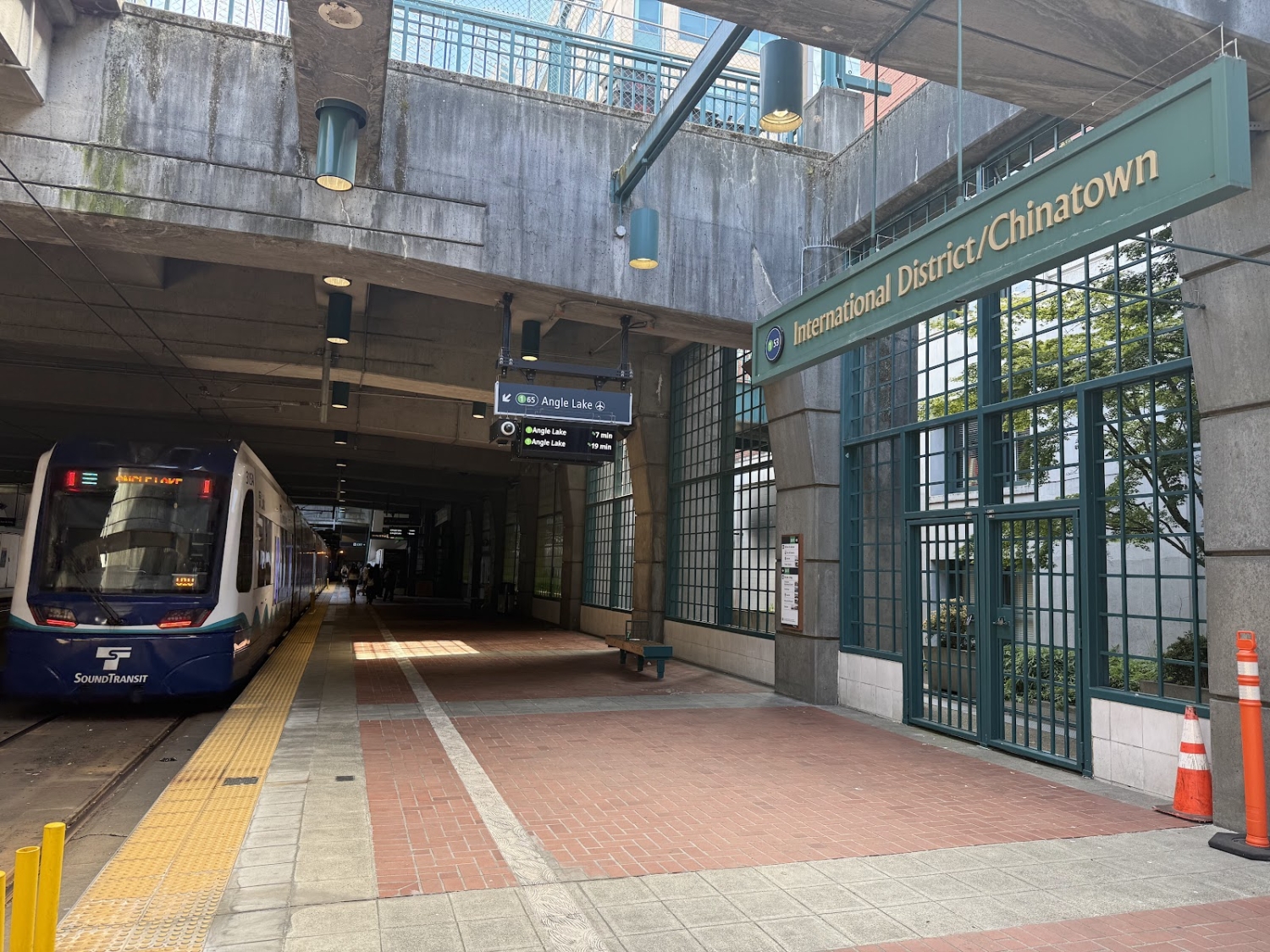
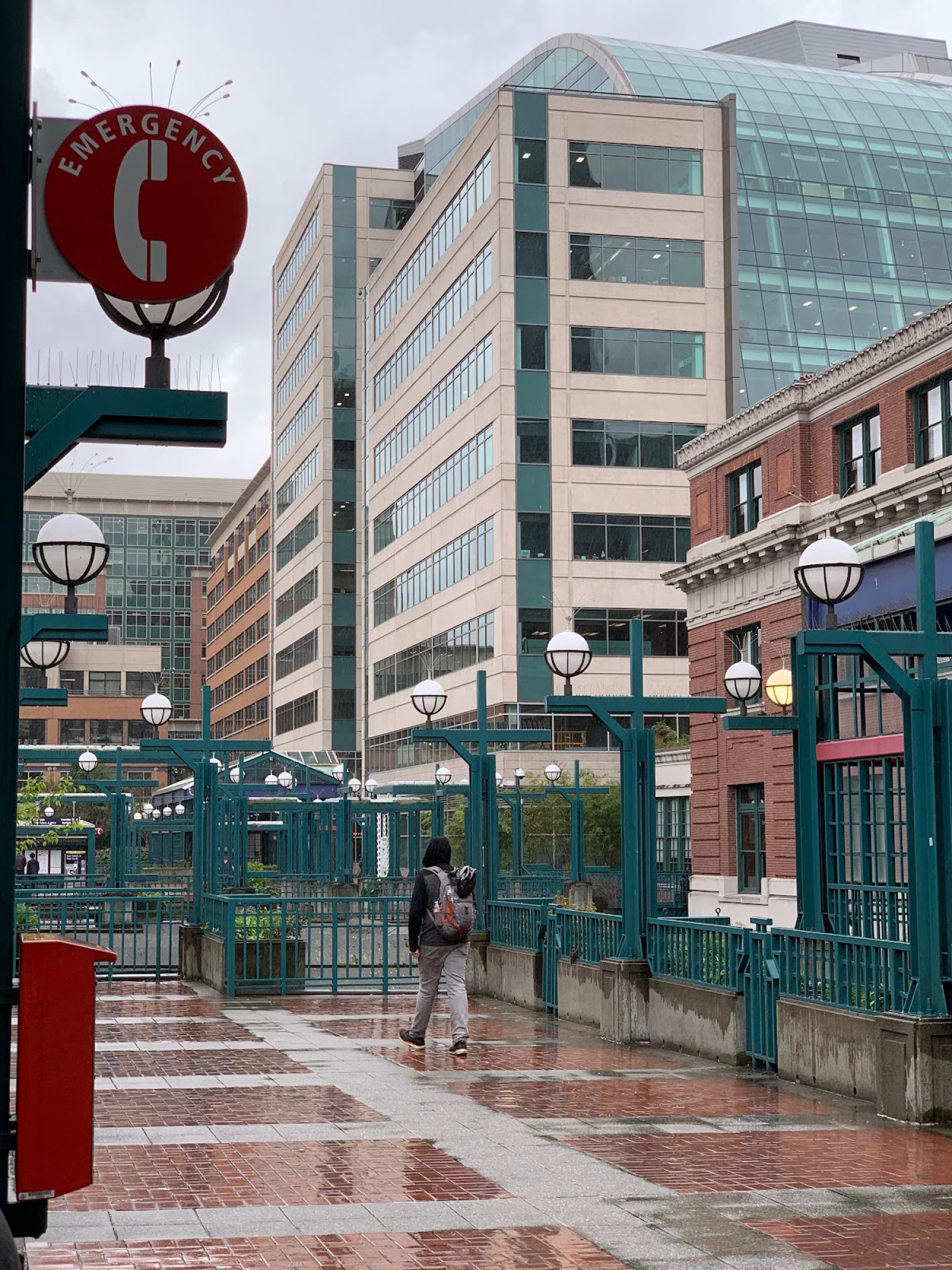
International District/Chinatown
Seattle
At a glance
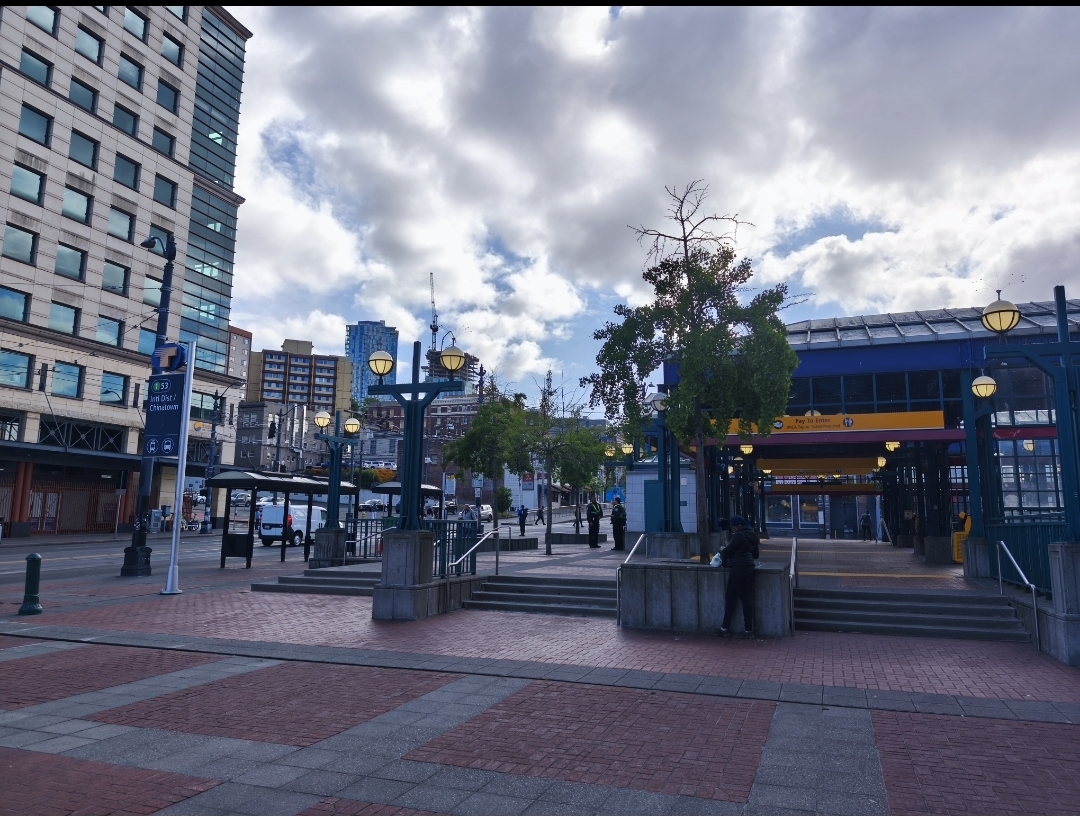
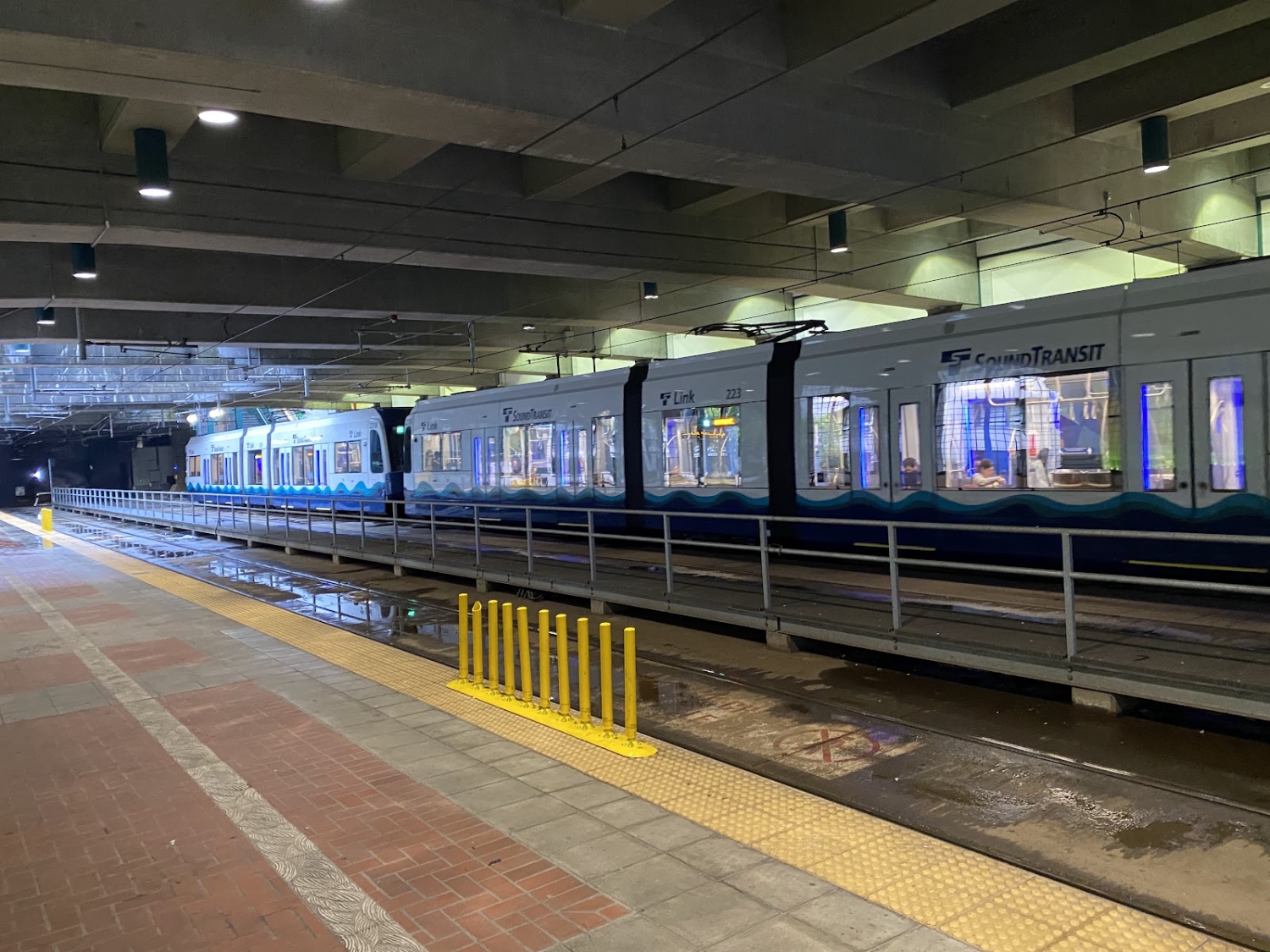
International District/Chinatown Station is a public transport station at 5th Avenue and South Jackson Street in Seattle. The station brings together Link light rail, local bus services and nearby streetcar stops, making it a practical interchange for journeys through the city and the wider regional network.
Link service at the station includes the 1 Line and 2 Line. The surrounding bus stops serve a broad selection of routes, with boarding points on South Jackson Street, 5th Avenue South and nearby streets. The First Hill Streetcar also serves stops at 5th and Jackson, adding another rail connection for local trips. The arrangement places several forms of public transport within the same station area, although individual services use different stop points.
Arrival information is available in real time, with separate listings for the station's rail platforms, bus stops and streetcar stops. This makes the station useful for checking departures and comparing connections in one place. Service alerts are also displayed, including notices about planned maintenance, event-related crowds and replacement buses. Those alerts can affect travel times or require a change between trains and shuttle buses, so the station's live information is an important part of using the interchange.
Accessibility varies by stop. The station and several nearby bus stop listings are identified as accessible, while the 5th and Jackson First Hill Streetcar stops are listed separately with different accessibility information. Riders who need an accessible boarding point can use the stop details to identify the relevant platform or curbside location for a chosen service.
The station does not have Sound Transit parking. Paid parking is available at other nearby lots, while bicycle facilities include free street racks outside the station and additional bike parking or storage options. As a transport hub with rail, bus and streetcar connections, International District/Chinatown Station suits commuters, visitors making cross-city trips and passengers transferring between services. Its usefulness comes from the range of routes and the real-time connection information rather than from a single type of transport.